

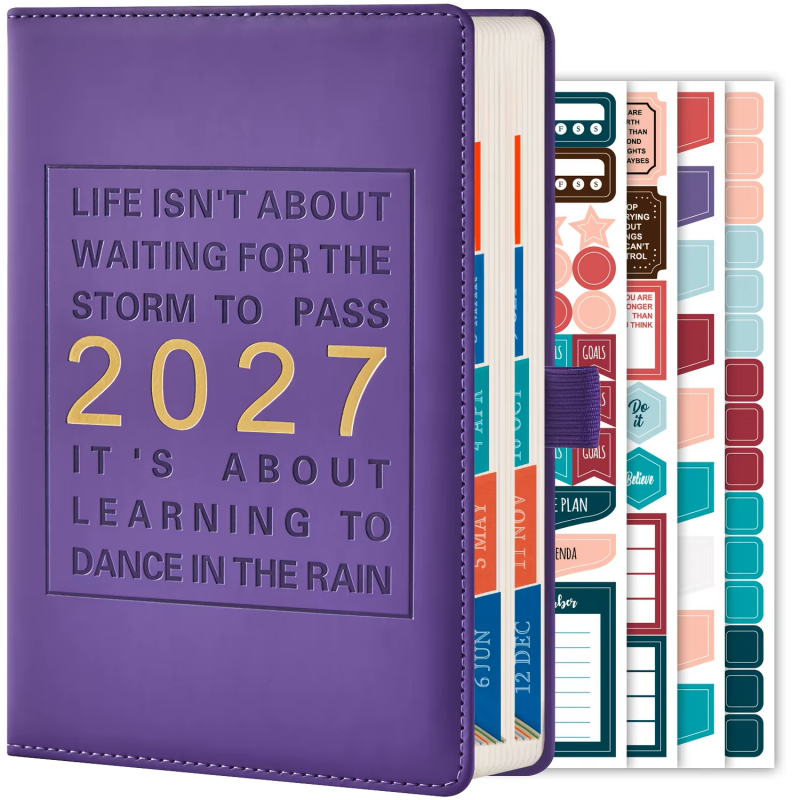
A new year brings new opportunities, responsibilities, and goals. Whether you want to manage your work schedule, stay on top of appointments, make time for personal projects, or simply feel less scattered throughout the day, having a planning system can help.
Getting organized does not mean scheduling every minute of your life. It means having a reliable place to record important information, decide what deserves your attention, and make realistic plans for your time.
As 2027 approaches, this is a great opportunity to establish a planning routine that works for your actual lifestyle—not just the version of your life you imagine having.
1. Start With What You Want to Accomplish
Before filling a planner with appointments and to-do lists, take a few minutes to consider what you want your year to look like.
Think about different areas of your life, such as:
-
Work and business: Projects, deadlines, professional development, and business goals.
-
Personal life: Family commitments, birthdays, appointments, and important events.
-
Money: Savings goals, bill due dates, and planned purchases.
-
Health and well-being: Time for movement, rest, and personal care.
-
Personal growth: Reading, learning new skills, journaling, or exploring a new interest.
You do not need a long list of goals for every category. Choose the areas that matter most to you right now.
For each goal, ask yourself: What is one practical step I can take to move toward this?
For example, instead of writing “get organized,” you could set a goal to spend 15 minutes planning your week every Sunday.
A clear action makes a broad goal easier to put into practice.
2. Use Monthly Planning to See the Bigger Picture
Monthly planning helps you look beyond today's responsibilities and understand what is coming up.
At the beginning of each month, record important dates, appointments, deadlines, celebrations, and commitments. This gives you a broader view of your schedule before the month becomes busy.
Next, identify your main priorities for the month.
You might choose to complete a work project, make progress on a personal goal, or prepare for an upcoming event. Keeping your priorities visible can help you decide how to use your available time.
Try this monthly planning routine:
-
Record appointments and important dates.
-
Add deadlines and events that require preparation.
-
Choose two or three priorities for the month.
-
Identify tasks that need to be started early.
-
Leave some open space for unexpected responsibilities.
Your monthly plan should guide you, not create pressure to fill every available day.
3. Turn Monthly Goals Into Daily Actions
A goal can feel overwhelming when you look at it as one large task. Breaking it into smaller actions makes it easier to begin.
Suppose your goal is to organize your home office. Instead of trying to finish everything in one day, divide the project into manageable steps:
-
Monday: Sort paperwork.
-
Tuesday: Organize desk supplies.
-
Wednesday: Review digital files.
-
Thursday: Clear and arrange your workspace.
-
Friday: Review what remains.
The same approach works for business projects, studying, writing, budgeting, and personal goals.
Use your daily planning pages to identify what you need to do today. Focus on the tasks that matter most rather than filling the page with everything you could possibly accomplish.
A useful question to ask each morning is: If I complete only three important tasks today, which three will make the biggest difference?
4. Try Hourly Scheduling Without Overplanning
An hourly schedule can help you understand where your time is going and make room for important tasks.
This approach is often called time blocking. You assign a task or activity to a particular period rather than keeping everything on an open-ended to-do list.
For example:
-
8:00–8:30 a.m. — Review the day's priorities.
-
9:00–10:00 a.m. — Focus on an important project.
-
10:00–10:30 a.m. — Respond to messages.
-
12:00–1:00 p.m. — Lunch and a break.
-
2:00–2:30 p.m. — Handle smaller administrative tasks.
These are only examples. Your schedule should reflect your own commitments, energy levels, and responsibilities.
Remember to leave transition time between activities. If every minute is scheduled, a single delay can throw off your entire day.
You also do not need to assign a specific time to every task. Use hourly scheduling for appointments, deadlines, focused work, and other activities that benefit from a defined time slot.
5. Make Your Planner Easy to Maintain
One common planning mistake is creating a system that takes more effort to maintain than the tasks it is supposed to organize.
Your planner does not need elaborate decorations, perfect handwriting, or a complicated color-coding system to be useful.
Try these simple habits:
Keep your planner accessible. Place it somewhere you naturally work or prepare for the day.
Choose a regular planning time. Review your schedule in the evening or at the beginning of your morning.
Use a simple marking system. For example, check off completed tasks and circle items that need to be rescheduled.
Review unfinished tasks. Decide whether to move them to another day, break them into smaller steps, or remove them if they are no longer necessary.
Allow your system to change. Your responsibilities may change throughout the year. Your planning method can change with them.
Consistency matters more than making every page look perfect.
6. Use Stickers and Writing Tools to Support Your System
Planning accessories can make your planner more personal and help you identify information quickly.
Stickers can highlight birthdays, appointments, deadlines, and special occasions. Different pen colors can distinguish work tasks from personal commitments or separate categories of notes.
However, keep your system simple enough that you can understand it at a glance. If you spend more time decorating your planner than using it, scale back and focus on what helps you stay organized.
Choose writing tools that feel comfortable and suit your needs. Fine-point pens can be useful for small calendar spaces, while colored markers can help highlight important details.
The goal is to create a planning system you enjoy using and can maintain throughout the year.
7. Remember to Schedule Time for Yourself
An organized schedule should include more than work, errands, and responsibilities.
Make room for rest, hobbies, reflection, and activities you enjoy. You might schedule time to read, write in a journal, take a walk, or spend a few quiet minutes preparing for the week ahead.
Treat these activities as legitimate parts of your schedule rather than things you can do only after everything else is finished.
A realistic plan recognizes that your time and energy are limited. You do not have to accomplish everything in one day to make meaningful progress.
8. Choose a Planner That Fits Your Needs
The best planner is one that supports the way you prefer to organize your life.
A monthly calendar is helpful for seeing important dates and commitments at a glance. Daily planning pages can provide more room for detailed task lists and appointments. Hourly schedules are useful when you need to allocate time to specific activities.
A combined daily and monthly planner can bring these planning methods together in one place.
If you prefer writing by hand, a hardcover planner can also keep your schedule and notes together without requiring you to switch between multiple notebooks. Features such as an inner pocket and included stickers may offer added convenience.
Before choosing a planner, consider its layout, size, portability, and whether it provides enough space for the way you plan.
Prepare for 2027 With The Sunny Desk
Getting organized for a new year does not require a complete life overhaul. Start with a few important goals, record your commitments, break larger tasks into smaller steps, and create a planning routine you can realistically maintain.
Small, consistent actions can help you approach your responsibilities with greater clarity and intention.
If you're preparing for the year ahead, explore the 2027 Hardcover Daily & Monthly Planner at The Sunny Desk. It features monthly and daily planning layouts, hourly scheduling, stickers, and an inner pocket to help keep your planning essentials together.
Make a little space for your plans, your priorities, and yourself.
Make your day a little sunnier with The Sunny Desk.
Add comment
Comments